Vol. 3 No. 1 (2026): Democracy, Disinformation, and the Future of the Public Sphere
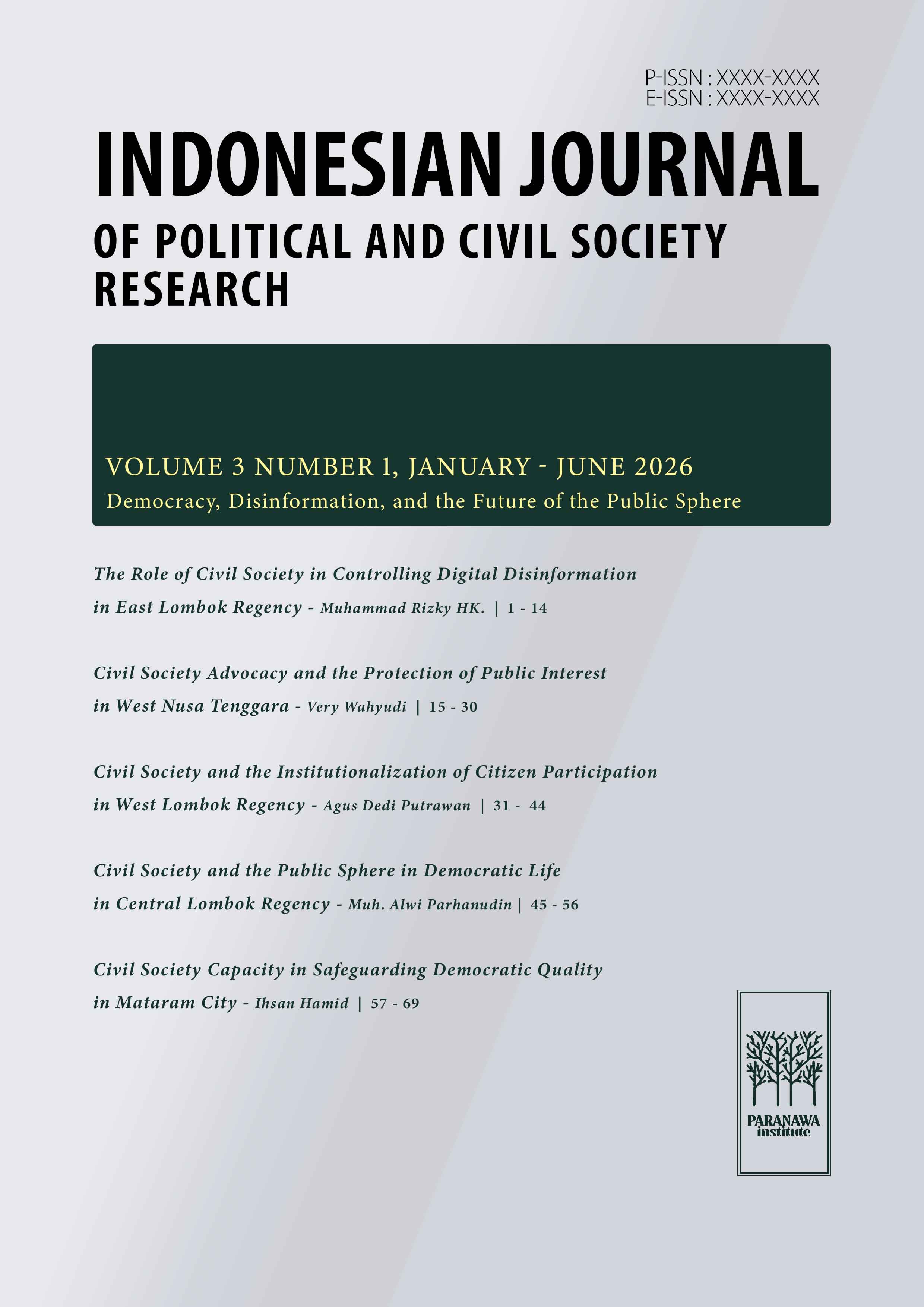
This theme begins from the reality that contemporary democracy is moving within a rapidly changing communication landscape. The public sphere, once imagined as an arena for the exchange of ideas, rational consideration, and the formation of a shared will, is now under pressure from massive, fast-moving, fragmented, and often difficult-to-verify flows of information. Disinformation no longer appears as a marginal disturbance. It has become an active part of struggles over influence, the shaping of opinion, the mobilization of identity, and the management of political perception.
The development of digital technology has expanded citizen participation, but it has also created wide opportunities for information manipulation, narrative fabrication, social polarization, and the weakening of public trust in democratic institutions. Under such conditions, the public sphere undergoes a shift in character. It no longer functions fully as a space of deliberation, but is often driven into a field of competition for attention, the production of sentiment, and struggles over legitimacy. As a result, the quality of public conversation, the health of democracy, and the capacity of citizens to take political positions reflectively all face increasing pressure.
Through this theme, the journal encourages studies that examine the relationship between democracy, digital media, disinformation, algorithms, epistemic authority, citizen participation, civil society movements, and the transformation of the public sphere in local, national, and global contexts. The theme also opens space for inquiries into identity politics, the ethics of public communication, digital propaganda, media literacy, platform regulation, and the new challenges faced by civil society in safeguarding the integrity of democratic life.
This issue is expected to serve as an academic space for developing a deeper understanding of how democracy is being tested by changes in the informational order, and of how the future of the public sphere may still be conceived as a field of freedom, responsibility, and the shaping of a more dignified common life.
Articles
-
Articles Open Access Published 22 April 2026
-
Articles Open Access Published 22 April 2026
-
Articles Open Access Published 22 April 2026
-
Articles Open Access Published 22 April 2026
-
Articles Open Access Published 22 April 2026